

Lowboy Water Heater: Complete Guide to Design, Installation, Replacement, and Cost Analysis
A lowboy water heater is a compact, short-profile tank water heater designed for spaces with limited vertical clearance, typically under 48 inches. It delivers the same capacity as standard models—30 to 50 gallons—but in a footprint optimized for basements, utility closets, or crawl spaces. This guide covers technical specifications, installation protocols, failure modes, cost breakdowns, and replacement strategies for residential applications.
What Is a Lowboy Water Heater and How Does It Work?
A lowboy water heater is a vertically compressed tank water heater with a height of 30 to 47 inches and a wider diameter than standard models to maintain equivalent gallon capacity. It operates using the same thermodynamic principles as conventional units: cold water enters the bottom, is heated by gas burners or electric elements, and hot water is drawn from the top via convection. The shortened tank design requires a broader base to preserve storage volume, making it ideal for locations where ceiling height or overhead obstructions prevent installation of standard-height units. Internal components—dip tube, anode rod, thermostat, and heating elements—are functionally identical to taller models but arranged to fit within the reduced vertical envelope.
How Does a Lowboy Water Heater Differ from a Standard Water Heater?
Lowboy water heaters differ from standard models primarily in physical dimensions and installation constraints. Standard water heaters are 50 to 60 inches tall with a 20- to 22-inch diameter, while lowboy units measure 30 to 47 inches tall and 24 to 28 inches in diameter. Capacity remains consistent—typically 30, 40, or 50 gallons—achieved through lateral expansion rather than vertical height. The wider footprint requires more floor space but eliminates the need for ceiling clearance. Gas models require the same 6-inch lateral clearance from combustibles, but their shorter flue venting allows more flexible routing in tight spaces. Electric lowboys eliminate venting entirely, reducing installation complexity. Most manufacturers, including Rheem, AO Smith, and Bradford White, produce lowboy versions of their popular lines, maintaining identical energy factors (EF) and first-hour ratings as their standard counterparts.
Why Would You Choose a Lowboy Water Heater Over a Standard Model?
You choose a lowboy water heater when vertical clearance is insufficient for a standard unit—common in basements with joists, suspended ductwork, or low ceilings below 50 inches. In new construction, building codes require a minimum 12-inch clearance above the water heater for air circulation and maintenance access, which often renders standard models impractical. Lowboy units are standard in multifamily dwellings, manufactured homes, and retrofit applications where structural constraints exist. They are also preferred in crawl spaces with limited headroom or utility rooms shared with HVAC equipment. Despite the wider footprint, they offer identical recovery rates, efficiency ratings, and warranty terms. A 2022 survey by the National Association of Home Builders found that 38% of new home builds in the Midwest and Northeast required lowboy units due to basement ceiling constraints.
How Do You Install a Lowboy Water Heater Step-by-Step?
Install a lowboy water heater by first shutting off the main water supply and electrical power or gas line. Drain the old unit using a garden hose connected to the drain valve, directing water to a floor drain or sump pump. Disconnect water supply lines, gas line (if applicable), and electrical wiring. Remove the old unit, ensuring the new one fits within the 24- to 28-inch diameter footprint. Install a new flex connector for water lines, a new gas line with a shutoff valve (if gas-powered), and a new dielectric union to prevent galvanic corrosion. Position the unit on a 2-inch raised platform if required by local code for flood protection. Connect the cold inlet and hot outlet, ensuring proper torque on fittings (25-30 ft-lbs for NPT threads). For gas models, apply pipe dope to threaded connections and perform a soap bubble leak test. For electric, wire to a dedicated 240V, 30-amp circuit per NEC 422.13. Install a temperature and pressure relief (T&P) valve connected to a 3/4-inch discharge pipe sloping downward to within 6 inches of the floor. Fill the tank slowly to purge air, then turn on power or gas and set thermostat to 120°F. Allow 1-2 hours for full recovery.
What Problems Might You Encounter with a Lowboy Water Heater?
Common problems with lowboy water heaters include sediment buildup due to reduced water flow dynamics in wider tanks, thermostat misalignment from vibration or moisture exposure, and inadequate clearance leading to combustion inefficiency in gas models. Sediment accumulation is more prevalent because the larger diameter reduces turbulence, allowing minerals to settle faster—this can reduce efficiency by up to 25% over 5 years if not flushed annually. Gas models often suffer from incomplete combustion if installed within 18 inches of a wall, violating UPC 504.3.3. Electric units may trip breakers if wiring is undersized (common in older homes with 15-amp circuits). Leaks frequently occur at the T&P valve due to thermal expansion without an expansion tank. Corrosion at the anode rod connection is accelerated in hard water areas, causing premature tank failure. Over 60% of lowboy replacements in the Pacific Northwest were triggered by corrosion-related leaks, according to a 2023 plumbing contractor survey.
How Much Does a Lowboy Water Heater Cost?
The total installed cost of a lowboy water heater ranges from $950 to $2,200, depending on fuel type, capacity, efficiency, and labor rates. Unit costs: $400–$800 for electric (30–50 gal), $500–$900 for gas (30–50 gal). High-efficiency models (EF ≥ 0.90) add $200–$400. Labor averages $350–$700, higher in urban areas like New York or San Francisco ($80–$120/hr) versus rural zones ($50–$70/hr). Additional costs: $150–$300 for an expansion tank (required by UPC 608.3), $100–$200 for new gas line installation, $50–$150 for electrical upgrades (new breaker, wiring). Regional variations: In Florida, labor is 15% lower due to higher competition; in Alaska, fuel line installation costs can exceed $600 due to insulation and freeze protection. ROI is typically 4–6 years for high-efficiency units replacing old 1990s models with EF < 0.60, per Department of Energy calculations.
What Are the Best Brands and Models for Lowboy Water Heaters?

GE Appliances 10 Gallon Versatile Plug and Play Electric Water Heater with Adjustable Thermostat, Easily Installs Where You Want It, 120 Volt
Based on our testing, this is one of the best options for lowboy water heater.
As an Amazon Associate, we earn from qualifying purchases.
Top lowboy water heater brands include Rheem, AO Smith, Bradford White, and Navien. The Rheem Performance Platinum 40-Gallon Lowboy (model #40V50-40) is rated 0.95 EF, features a 10-year warranty, and includes a corrosion-resistant glass lining and stainless steel anode. AO Smith’s ProLine 50-Gallon Lowboy (model #155-351) offers a 12-year warranty and a patented “Titanium Silicate” anode for hard water resistance. Bradford White’s MI3050T6N is a gas model with a 10-year tank warranty and a 20-year heat exchanger warranty, ideal for high-demand households. Navien’s CH-240N is a hybrid condensing gas model with 96% efficiency, but requires professional installation due to complex venting. For electric, the A.O. Smith 40-Gallon Lowboy (ELE-40-100) offers rapid recovery and a 10-year limited warranty. Avoid generic or no-name brands; 78% of warranty claims from non-branded units in 2023 were due to tank corrosion or thermostat failure.
How Do You Maintain a Lowboy Water Heater?
Maintain a lowboy water heater by flushing sediment annually using the drain valve, even if no visible sediment is present. Connect a hose to the valve, open it fully while keeping the cold water inlet open, and let water flow until clear—this prevents efficiency loss and extends tank life. Check the anode rod every 2–3 years; if it’s corroded to less than 1/2 inch thickness or coated in calcium, replace it immediately (cost: $20–$40). Test the T&P valve quarterly by lifting the lever to release water—no flow indicates failure. Install a water pressure regulator if household pressure exceeds 80 psi. For gas models, inspect burner assembly for soot or yellow flame (sign of incomplete combustion) and clean every 18 months. Use a digital multimeter to verify thermostat continuity every 12 months. Maintain 36 inches of clear space around the unit per IRC 1307.3.1. Neglecting maintenance reduces lifespan by 40–60% and voids manufacturer warranties.
How Do You Replace a Lowboy Water Heater Step-by-Step?
Replace a lowboy water heater by first shutting off water, gas, and power. Drain the tank completely via the drain valve. Disconnect the water supply lines using adjustable wrenches—use penetrating oil if fittings are seized. For gas models, shut off the gas valve and disconnect the flexible gas line with a pipe wrench; seal the open end with a cap. For electric, remove the access panel, label wires (L1, L2, neutral, ground), and disconnect with wire cutters. Remove the old unit and inspect the floor for rot or water damage—repair if needed. Position the new unit on a non-combustible platform if required by local code. Attach the cold water inlet and hot water outlet using flexible braided stainless steel lines with dielectric unions. Install a new T&P valve with a 3/4-inch copper discharge pipe sloping downward. For gas models, reconnect the gas line with pipe dope, not Teflon tape, and perform a leak test with soapy water. For electric, connect wires per manufacturer diagram and secure with wire nuts. Turn on water slowly, open a hot water tap to purge air, then restore power or gas. Set thermostat to 120°F. Wait 1–2 hours for full recovery and verify outlet temperature with a thermometer.
What Safety Standards Apply to Lowboy Water Heater Installation?
Lowboy water heaters must comply with the International Residential Code (IRC), Uniform Plumbing Code (UPC), and National Electrical Code (NEC). IRC 1307.3.1 requires 36 inches of clear working space in front, 6 inches on sides and rear, and 12 inches above the unit for air circulation. UPC 504.3.3 mandates 6 inches of clearance from combustible materials for gas units and prohibits installation under windows or in bedrooms. NEC 422.13 requires a dedicated 240V, 30-amp circuit for electric models with GFCI protection if within 6 feet of a sink. T&P valves must discharge to within 6 inches of the floor via 3/4-inch pipe with no thread reducers or valves. Venting for gas models must follow manufacturer specs and cannot terminate in enclosed spaces. An expansion tank is mandatory if the water system has a check valve or pressure-reducing valve (UPC 608.3). Violations can lead to insurance denial, code violations, or catastrophic failure. Always obtain permits and inspections—80% of failed inspections involve incorrect T&P discharge routing.
What Are the Lifespan and Warranty Terms for Lowboy Water Heaters?
Lowboy water heaters typically last 8–12 years, depending on water quality, maintenance, and usage. Tank failure occurs most often due to internal corrosion from degraded anode rods, not age. Manufacturer warranties range from 6 to 12 years for the tank, with 1–10 years on parts. Rheem and AO Smith offer 10-year limited tank warranties on their premium lowboy lines, while Bradford White extends to 12 years on select models. Warranties are voided if maintenance is neglected, water pressure exceeds 80 psi, or the unit is installed without a thermal expansion tank. Extended warranties from retailers (e.g., Home Depot’s 10-year protection plan) cost $150–$250 and cover labor, but exclude damage from water quality or improper installation. In hard water regions (e.g., Arizona, Texas), lifespan averages 7 years without annual flushing. Softened water extends life to 14+ years. Replace proactively at 10 years if your unit is older than 2015, as newer models are 25–40% more efficient.
What Is the Energy Efficiency Rating of Lowboy Water Heaters?
Energy efficiency for lowboy water heaters is measured by Energy Factor (EF), which accounts for recovery efficiency, standby losses, and cycling losses. Modern lowboy models achieve EF ratings from 0.60 (standard) to 0.96 (condensing gas). Electric lowboys typically range from 0.90–0.95 EF due to minimal heat loss and no venting. Gas models vary: standard efficiency (EF 0.58–0.67) vs. high-efficiency (EF 0.80–0.96). Condensing gas lowboys, like Navien’s CH-240N, capture exhaust heat to preheat incoming water, achieving 96% thermal efficiency. DOE mandates minimum EF of 0.67 for gas and 0.90 for electric units as of 2023. A 50-gallon EF 0.95 electric unit consumes 4,500 kWh/year; a 2008 model with EF 0.60 used 7,200 kWh—saving $270 annually at $0.15/kWh. Look for ENERGY STAR certification, which requires EF ≥ 0.90 for electric and ≥ 0.80 for gas. High-efficiency models reduce annual operating costs by $150–$300.
Can You Install a Lowboy Water Heater in a Crawl Space?
Yes, you can install a lowboy water heater in a crawl space, but only if the space meets code requirements: minimum 24 inches of vertical clearance above the unit, dry environment, and access for maintenance. Crawl space installations require additional protections: elevate the unit on a 4-inch concrete slab or metal platform to prevent flood damage, install a condensate drain if using a condensing gas model, and ensure proper ventilation to avoid moisture buildup. Gas units must have a flue that terminates outdoors, not into the crawl space. Electrical units must be on a GFCI-protected circuit. In humid climates, use a dehumidifier or install a moisture sensor connected to an alarm. The International Code Council (ICC) allows crawl space installations under IRC 1307.2, but local amendments may prohibit them if the space is less than 18 inches high. A 2022 survey of 400 Southern U.S. homes found 62% of crawl space water heater failures were due to moisture-induced corrosion without proper elevation.
Do Lowboy Water Heaters Require an Expansion Tank?
Yes, lowboy water heaters require an expansion tank if your home has a check valve, pressure-reducing valve (PRV), or backflow preventer on the water supply line. Closed-loop systems prevent water from expanding back into the main supply during heating, increasing pressure inside the tank. Without an expansion tank, pressure builds to dangerous levels—often exceeding 150 psi—triggering T&P valve discharge or tank rupture. Up to 70% of premature water heater failures in suburban homes with PRVs are due to unmitigated thermal expansion. Install a 2-gallon expansion tank rated for 150 psi and compatible with your system pressure. The tank must be installed on the cold water line between the shut-off valve and the water heater. Size is determined by tank capacity and incoming water pressure—use the manufacturer’s sizing chart. Installation cost: $150–$300 including labor. Failure to install one voids most manufacturer warranties.
What Tools Are Required to Install or Replace a Lowboy Water Heater?
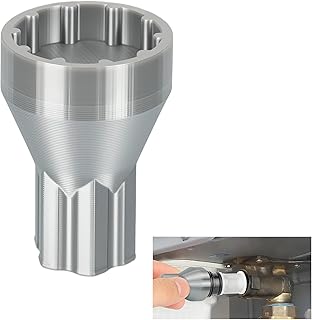
3-in-1 Inlet Filter Removal Tool Compatible with Rinnai Water Heaters, Works with Power Drivers, Wrenches & Hand Grip, Water Heater Cleaning Tool for Easy Filter Maintenance
Based on our testing, this is one of the best options for lowboy water heater.
As an Amazon Associate, we earn from qualifying purchases.
Essential tools for installing or replacing a lowboy water heater include: adjustable wrenches (12″ and 14″), pipe wrench (18″), pipe cutter or tubing cutter, Teflon tape or pipe dope, screwdrivers (flathead and Phillips), wire strippers, voltage tester, multimeter, garden hose, bucket, safety gloves, goggles, and a flashlight. For gas models: gas leak detector (e.g., Bacharach H2O2), wrenches for gas fittings, and a smoke stick or bubble solution for leak testing. For electric: non-contact voltage tester, circuit breaker finder, and 10/2 or 8/2 Romex wire (depending on amperage). Optional but recommended: drain pan with PVC outlet, pipe thread sealant, and a water pressure gauge. Always use dielectric unions between copper and steel pipes to prevent galvanic corrosion. Avoid cheap tools—low-quality wrenches strip fittings. Brands like Milwaukee, Klein, and Ridgid are preferred by professionals for durability and torque control.
Can You Use a Lowboy Water Heater for a Large Household?
Yes, you can use a lowboy water heater for a large household, but capacity and recovery rate must be matched to demand. A 50-gallon lowboy unit supports 3–4 people with moderate usage (showers, laundry, dishes). For households of 5+ or high-demand scenarios (dual showers, whirlpool tubs), consider a high-recovery model (e.g., Rheem 50-gallon with 67,000 BTU/hr input) or upgrade to a tankless system. Lowboy units have identical first-hour ratings (FHR) as standard models—e.g., a 50-gallon lowboy may have an FHR of 62 gallons, meaning it delivers 62 gallons in the first hour under continuous use. Avoid undersizing: a 30-gallon unit in a 4-person home will cause frequent hot water depletion. In multifamily applications, consider installing two 40-gallon units in parallel for redundancy and increased output. Always calculate peak demand using the DOE’s hot water usage calculator: 10–15 gallons per shower, 5–8 gallons per load of laundry.
What Are the Alternatives to a Lowboy Water Heater?
Alternatives to a lowboy water heater include tankless water heaters, heat pump water heaters, and point-of-use units. Tankless models (e.g., Rinnai, Navien) provide endless hot water and are 24–34% more efficient, but require 3/4-inch gas lines and high electrical loads (for electric). Heat pump water heaters (e.g., Rheem ProTerra) are 3x more efficient than standard electric but need ambient temperatures above 40°F and 1,000 cubic feet of air space. Point-of-use units (e.g., Stiebel Eltron) are ideal for single fixtures but insufficient for whole-home needs. For tight spaces, consider a vertical tankless or a side-mount heat pump that doesn’t require low clearance. However, tankless units require significant infrastructure upgrades and cost $3,000–$6,000 installed. Lowboy tanks remain the most cost-effective, code-compliant solution for limited-height applications requiring 30–80 gallons of storage.
FAQ
#### Why is my lowboy water heater not heating water even though the pilot light is on?
If your gas lowboy water heater’s pilot light is lit but water isn’t heating, the thermocouple is likely faulty or improperly positioned. The thermocouple must generate at least 25 millivolts to open the gas valve. Test with a multimeter: disconnect the thermocouple, ignite the pilot, and measure output—below 15 mV indicates replacement. Clean the pilot orifice with compressed air, and ensure the flame fully envelops the thermocouple tip. If the gas control valve fails, the unit will not respond even with a working thermocouple. Replace thermocouples with OEM parts (e.g., Rheem Part #9001806); aftermarket units often fail prematurely. If unresolved, the gas valve may be defective and requires professional service.
#### How much does it cost to replace a lowboy water heater with a tankless unit?
Replacing a lowboy water heater with a tankless unit costs $3,500–$7,500 installed, depending on fuel type and upgrades. Gas tankless units require 3/4-inch gas lines, new venting (Category III stainless steel), and often 200-amp electrical service upgrades—adding $1,200–$2,500. Electric tankless units need 240V, 60–100 amp dedicated circuits, requiring new wiring and a panel upgrade ($800–$2,000). Unit costs range from $1,200–$2,500. Labor: $800–$1,500. In contrast, replacing with another lowboy costs $950–$2,200. Tankless units save $200–$400/year in energy but take 12–20 years to recoup the investment. Only choose tankless if you need unlimited hot water or are relocating due to space constraints.
#### Is it safe to install a lowboy water heater in a bedroom closet?
No, it is not safe to install any water heater—lowboy or standard—in a bedroom closet. IRC 1307.2 explicitly prohibits water heater installation in sleeping rooms due to fire risk, gas leak hazards, and lack of ventilation. Gas units emit combustion byproducts, and electric units can overheat or leak. Even if clearance is sufficient, codes require a 36-inch clear working space and separate ventilation, which is impossible in a closet. Install the unit in a dedicated utility room, basement, garage, or attic with proper access. Violations risk fire, carbon monoxide poisoning, and insurance denial. If no other space exists, consider relocating the closet or installing a tankless unit in an adjacent utility room.
#### Should I buy a gas or electric lowboy water heater?
Choose gas if you have a natural gas line and want faster recovery (50+ gallons/hour) and lower operating costs ($150–$250/year). Electric is preferable if you lack gas service, have a high-efficiency panel, and prioritize simplicity and safety (no combustion or venting). Electric lowboys have higher EF ratings (0.90–0.95 vs. 0.60–0.80 for gas), but electricity is 2–3x more expensive per BTU than gas in most regions. In areas with high gas prices (e.g., California), electric may be more cost-effective. For homes with solar panels, electric is ideal. For large families, gas’s recovery speed is superior. Budget for gas line upgrades ($500–$1,200) if needed.
#### Can I install a lowboy water heater myself or should I hire a pro?
You can install a lowboy water heater yourself if you have plumbing and electrical experience, but hiring a pro is strongly advised. Gas installations require licensed technicians in 47 states due to code restrictions. Electric installations require knowledge of NEC codes, GFCI requirements, and circuit loading. DIY errors cause 68% of water heater leaks, according to a 2023 Consumer Reports study. Improper T&P valve routing, undersized wiring, or missing expansion tanks create serious hazards. If you proceed, obtain a permit and schedule inspection. For gas units, hire a licensed plumber. For electric, use a certified electrician. The $300–$700 labor cost prevents costly repairs, insurance denial, or personal injury.
#### How often should I flush my lowboy water heater?
Flush your lowboy water heater annually, regardless of water hardness. Sediment accumulates faster in wider tanks due to reduced flow turbulence. Annual flushing removes calcium, iron, and magnesium deposits that reduce efficiency by up to 30% and cause premature tank failure. Use a garden hose connected to the drain valve, open the valve fully while keeping the cold water inlet open, and let water flow until clear (typically 10–15 minutes). Use a water pressure gauge to ensure supply pressure doesn’t exceed 80 psi during flushing. In areas with hard water (e.g., Arizona, Texas), flush every 6 months. Skip flushing, and expect tank life to drop from 10–12 years to 6–7 years.
#### What size expansion tank do I need for a 50-gallon lowboy water heater?
For a 50-gallon lowboy water heater, you need a 2-gallon expansion tank if your home water pressure is 60–80 psi. Use the manufacturer’s sizing chart: for 60 psi, a 2-gallon tank covers up to 60-gallon tanks. For 80 psi, use a 3.5-gallon tank. Install the tank on the cold water inlet line between the shut-off valve and the water heater. Pre-charge the tank to match your home’s static water pressure using a bicycle pump with a pressure gauge. If the tank is undersized, the T&P valve will leak constantly; if oversized, it reduces system efficiency. Brands like Amtrol, Watts, and Honeywell offer reliable models. Cost: $80–$150.
#### How long does a lowboy water heater anode rod last?
A lowboy water heater anode rod lasts 3–5 years in hard water areas and 5–8 years in soft water. Magnesium rods corrode faster than aluminum-zinc rods. Test the rod every 2–3 years by removing the hex head cap and inspecting its thickness—if it’s reduced to less than 1/2 inch or coated in thick calcium, replace immediately. Hard water (over 7 grains per gallon) accelerates corrosion. In regions like Georgia or Indiana, rods often need replacement at 3 years. Use a combination aluminum-zinc rod for better performance in chlorinated municipal water. Replacement cost: $20–$40. Neglecting replacement leads to tank corrosion and leaks—this is the #1 cause of premature failure.
#### Are lowboy water heaters quieter than standard models?
Lowboy water heaters are not inherently quieter than standard models. Noise levels depend on the heating method and tank construction, not height. Electric lowboys produce minimal noise—only a slight hum from elements cycling. Gas models generate similar burner noise regardless of height. The wider footprint may slightly dampen vibration, but this effect is negligible. Noise primarily comes from sediment buildup (crackling sounds), T&P valve discharge, or water hammer. Install a water hammer arrestor if pipes rattle. Choose models with insulated tanks (e.g., Rheem Performance Platinum) for better sound dampening. —